
Course Overview
This two-week course introduces high-school students to the basic chemistry and high-level economics of energy systems. It offers an accessible but rigorous perspective on the scientific foundations and real-world challenges of developing renewable fuels. Students will gain an appreciation for how chemistry, catalysis, and process design intersect with global energy policy and economics. By connecting the molecular scale of chemical reactions to the industrial and societal scale of energy systems, the course empowers students to think critically about how sustainable technologies emerge—and why transforming today’s fuel economy into a circular, low-carbon system remains both an urgent challenge and an exciting frontier in science and engineering.
In the first week, students engage in lectures, breakout discussions, and hands-on laboratory demonstrations addressing basic chemistry principles (the course assumes no background), conventional petroleum refining, and ethanol conversion as a case study in renewable fuels production. The second week will integrate technical, economic, and societal perspective by having students examine case studies of biofuel production companies (past and present). The second week culminates in a symposium where teams will print and present posters for faculty and peer review.
All students who successfully complete the course will receive a Certificate of Completion and have the opportunity to request a Syracuse University noncredit transcript.
Learning Objectives
- Analyze the chemistry of conventional (petroleum-based) and renewable (bio-) fuels
- Understand laboratory data related to chemical reaction rates and process efficiencies (yields)
- Evaluate the economic and policy challenges of transitioning to clean energy.
- Collaborate in small groups to design and communicate an energy concept integrating sustainability principles.
Course Information
Course Prefix and Number: TBD
Format: On Campus (at Syracuse University)
Eligibility: Students must be of rising high school sophomore, junior, or senior status – or a 2026 high school graduate.
Credit: Noncredit
Grading: Pass/Fail
- Residential: $4,995
- Commuter: $4,024
Program rates are subject to change and will be approved by the board of trustees. Discounts and scholarships are also available.
Program Information
Summer College – On Campus: Experience what college is really like: take a college-level course, live in a residence hall, have meals with friends in a dining hall, and participate in activities and events on campus.
Course Dates and Details
| Program | Course Dates | Synchronous Class Time (Eastern Time) | Credit/Noncredit |
|---|---|---|---|
| Summer College – On Campus | 2-Week Session II: Sunday, July 19 – Friday, July 31, 2026 | MTWThF; 9 a.m. – 3 p.m. | Noncredit |
To see if this course is ‘open,’ refer to the full course catalog.
Required Supplies
Students are required to bring a laptop for this course. Students also need to bring long pants and closed toes shoes for lab hours and demos.
Typical Day
Tentative Schedule
- 9 – 10 a.m.: Lecture 1
- 10 – 11 a.m.: Breakout Session
- 11 a.m. – Noon: Presentations
- Noon – 1 p.m.: Lunch
- 1 – 2 p.m.: Lab Demo
- 2 – 3 p.m.: Lecture 2 and Wrap-Up
When class is over, and on weekends, students can look forward to various Summer College – On Campus activities to meet and connect with other students! Check out our On Campus Experience page for more information!
Faculty Bios
Theodore Walker
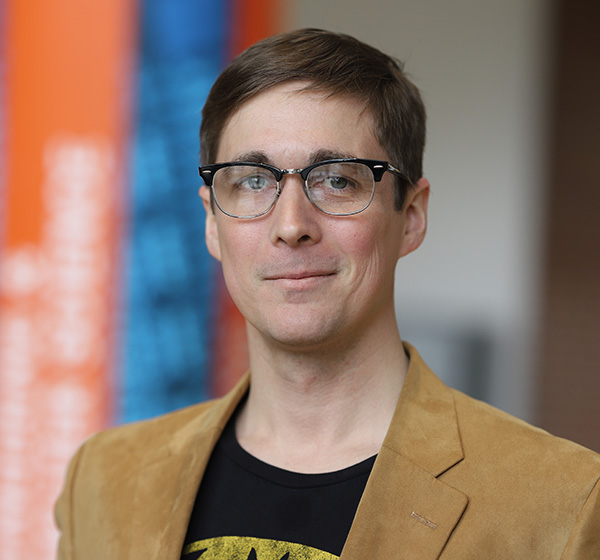
My career began with rigorous training under Profs. George Huber and James Dumesic at the University of Wisconsin–Madison, where my PhD studies combined experiments and molecular dynamics simulations to reveal solvent effects in liquid-phase biomass conversion processes. This work produced publications in premier scientific journals like Energy & Environmental Science, ACS Catalysis, and Science Advances; and introduced me to the power of uniting molecular-level insight with applied catalysis.
At ExxonMobil Research and Engineering, where I worked as a senior scientist from 2015-2019, I co-invented processes for plastic and biomass conversion into renewable products, securing multiple patents and awards while leading cross-functional teams on real-world deployment. Since founding my lab at Syracuse in 2022, I have advanced independent directions at the interface of catalysis and materials science. Recent preprints and manuscripts highlight: (i) polymer-modified supports that tune solvation and improve liquid-phase selectivity; (ii) stability limits of iron-based oxygen evolution reaction (OER) catalysts; and (iii) zeolite modifications that resist alkali poisoning during biomass conversion.
As an engineering professor, I integrate frontier science into the classroom to prepare students for careers in renewable energy and sustainability. In my courses (Materials & Energy Balances, Statistical Mechanics, and Chemical Engineering Laboratory), I emphasize hands-on inquiry, statistical rigor, and technical writing, equipping students with skills to thrive in academia, industry, or policy. Beyond the classroom, my lab trains graduate and undergraduate researchers in a highly collaborative style, embedding them in cross-disciplinary projects with theorists, experimentalists, and national labs. I view teaching and mentoring as inseparable from research: both are vehicles for empowering the next generation to tackle climate and energy challenges with creativity and resilience.