
Course Overview
Why do some neighborhoods gentrify while others get abandoned? How does a $10 shirt at Shein connect to a factory worker in Bangladesh? How did your favorite coffee get from a mountainside in Ethiopia to your kitchen? What makes someone “illegal”—and who gets to decide?
Human geography explores how people shape places and how places shape people. In this course, you’ll investigate the spatial patterns behind every day phenomena, from migration and urban sprawl to climate displacement and global supply chains. You’ll learn to see the world like a geographer: asking not just what happens, but where, why there, and who benefits.
From your own neighborhood to global systems, we’ll move between scales, examining how culture, economics, politics, and environment intersect in specific places. Expect discussions, hands-on activities, field trips and opportunities to apply geographic thinking to issues you care about.
All students who successfully complete the course will receive a Certificate of Completion and have the opportunity to request a Syracuse University credit transcript.
Learning Objectives
By the end of this course, students will be able to:
- Use geographic concepts to explain real-world patterns: why things are located where they are and what that means for people’s lives
- Analyze how power, inequality, and space work together across different scales
- Read landscapes, maps, and data critically, asking whose perspectives they represent
- Communicate geographic arguments clearly in writing, visuals, and discussion
Course Information
Course Prefix and Number: GEO 171
Format: On Campus (at Syracuse University)
Eligibility: Students must be of rising high school junior or senior status – or a 2026 high school graduate.
Credit: 3 Credits
Grading: A-F
Cost:
- Residential: $5,595
- Commuter: $4,624
Program rates are subject to change and will be approved by the board of trustees. Discounts and scholarships are also available.
Program Information
Summer College – On Campus: Experience what college is really like: take a college-level course, live in a residence hall, have meals with friends in a dining hall, and participate in activities and events on campus.
Course Dates and Details
| Program | Course Dates | Synchronous Class Time (Eastern Time) | Credit/Noncredit |
|---|---|---|---|
| Summer College – On Campus | 2-Week Session I: Sunday, July 5 – Friday, July 17, 2026 | MTWThF; 9 a.m. – 1 p.m. | 3 Credits |
To see if this course is ‘open,’ refer to the full course catalog.
Required Supplies
Required Supplies:
- Students are required to bring a laptop.
Typical Day
Tentative Schedule
- 9:00 – 9:30 a.m.: Opening reflections and review
- 9:30 – 10:30 a.m.: Lecture
- 10:30 – 10:45 a.m.: Break
- 10:45 – 11:45 a.m.: Discussion/groupwork
- 11:45 a.m. – Noon: Break
- Noon – 1:00 p.m.: Group activity, one-on-one meetings, in-class assignments
When class is over, and on weekends, students can look forward to various Summer College – On Campus activities to meet and connect with other students! Check out our On Campus Experience page for more information!
Faculty Bios
Natalie McLaughlin (Teaching Session I)
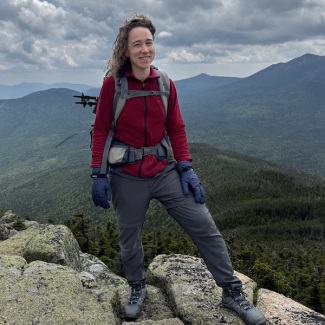
Natalie McLaughlin is a PhD student at Syracuse University. She holds an MA in Geography from Syracuse University and a BA from Swarthmore College in Sociology and Anthropology. Natalie has worked as a Teaching Assistant at SU and has taught discussion sections for classes including Environment and Society, Human Geography, World Urban Geography, and Geography of Capitalism. Her research focuses on urban redevelopment, industrial policy, and housing inequality. Natalie lives in Syracuse and enjoys hiking, long distance running, and spending time with her dog, Ava.