
Course Overview
Food and Society is an introductory-level sociology course in which we will explore the relationship between people, culture, food, and the environment. Students will first learn how they can adopt a “sociological imagination,” or a sociological lens, through which they can view our global food system. We will then overview the history of our global food system, dissecting the relationships between various methods of agriculture, international trade agreements, and food aid. Then, we will deeply engage with a variety of contemporary food-related topics, including sustainable food systems, healthy eating, food policy, labor in the food system, and food movements.
All students who successfully complete the course will receive a Certificate of Completion and have the opportunity to request a Syracuse University credit or noncredit transcript.
Learning Objectives
Through group activities, engaging discussions, field trips, guest speakers, and short personal essays, students will gain an invaluable skill set to think critically about the role of society in shaping our global food system. By the end of this course, students will be able to:
- Examine the historical significance of society in shaping our global food system
- Identify core components of food production as a social institution
- Compare and contrast social constructions of food from scientific, health, policy, and labor perspectives
- Discuss social movements focused on the production, distribution, and consumption of food
Course Information
Course Prefix and Number: SOC 200 / SCN 192
Format: On Campus (at Syracuse University)
Eligibility: Students must be of rising high school sophomore* junior, or senior status – or a 2026 high school graduate.
*Rising sophomores are only eligible for the noncredit version of this course.
Credit: 3 credits or Noncredit
Grading:
- Credit: A-F
- Noncredit: Pass/Fail
Cost:
3 Credit:
- Residential: $5,595
- Commuter: $4,624
Noncredit:
- Residential: $4,995
- Commuter: $4,024
Program rates are subject to change and will be approved by the board of trustees. Discounts and scholarships are also available.
Program Information
Summer College – On Campus: Experience what college is really like: take a college-level course, live in a residence hall, have meals with friends in a dining hall, and participate in activities and events on campus.
Course Dates and Details
| Program | Course Dates | Class Time (Eastern Time) | Credit/Noncredit |
|---|---|---|---|
| Summer College – On Campus | 2-Week Session I: Sunday, July 5 – Friday, July 17, 2026 | MTWThF; 9 a.m. – 1 p.m. | 3 credits or Noncredit |
To see if this course is ‘open,’ refer to the full course catalog.
Required Supplies
Course Materials
- Laptop
Textbook Requirement
- There are no textbook requirements. All online readings will be provided to students when they are in class.
Typical Day
Tentative Schedule
Students are required to attend class Monday – Friday from 9 a.m. – 1 p.m. A typical day is as follows:
9 -10 a.m.: Lecture 1
10 – 10:40 a.m.: Guest speaker, group exercise, class activity, or discussion
10:40 – 11 a.m.: Break
11 a.m. – Noon: Lecture 2
Noon – 12:40 p.m.: Guest speaker, group exercise, class activity, or discussion
12:40 – 1 p.m.: Review assignments and quizzes
When class is over, and on weekends, students can look forward to various Summer College – On Campus activities to meet and connect with other students! Check out our On Campus Experience page for more information!
Guest Speakers
Guest speakers may include local experts on specific social problems, such as climate change or poverty. Guest speakers will be invited to attend class and will speak for no longer than an hour with built-in time for student Q&A and discussion.
Faculty Bio
Katherine Mott
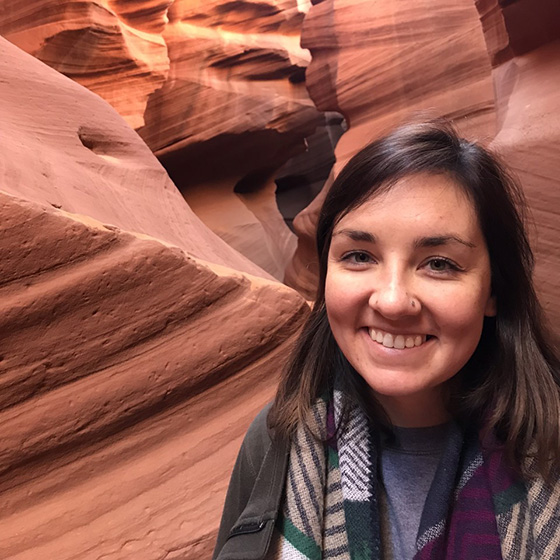
Katherine Mott is a Sociology PhD student in the Maxwell School of Citizenship and Public Affairs. Her research interests examine the intersection of urban poverty and low-wage, precarious work.
Passionate about math and science from a young age, Katherine graduated from SUNY College of Environmental Science and Forestry with a Bachelor of Science in Environmental Engineering in 2015. After working as a water engineer designing green storm water infrastructure plans for the City of Philadelphia, Katherine pursued her growing interest in food insecurity and urban poverty. She obtained an M.S. in Food Studies from Syracuse University in 2019 after conducting thesis research on the impacts of a longstanding, locally-owned cornerstone grocery store closing in Syracuse’s predominantly Black and Latino low-income Near Westside neighborhood. Prior to returning to graduate school for her PhD in Sociology, Katherine worked as a data analyst for a state-funded anti-poverty initiative, Greater Syracuse HOPE.