
Course Overview
Artificial Intelligence (AI) is changing the way we learn, work, and live, and it’s opening exciting new possibilities for your future. Build Your Future with AI is an interactive, beginner-friendly course that introduces students to the world of AI and how it’s shaping careers, creativity, and innovation. You’ll discover how AI is used in everything from social media and music to healthcare, sports, and climate science, and learn how to use AI tools yourself to solve problems and express ideas in new ways.
Throughout the course, you’ll explore what AI really is, how it learns, and how people are using it responsibly to make a difference in the world. You’ll get hands-on experience with popular AI platforms, practice designing creative projects with AI, and discuss the big questions about how technology affects our lives. By the end, you’ll have the skills, confidence, and insight to imagine how AI can help you build your own future whether in college, a career, or beyond.
All students who successfully complete the course will receive a Certificate of Completion and have the opportunity to request a Syracuse University noncredit transcript.
Course Objectives
By the end of this course, the students will be able to:
- Explain what Artificial Intelligence is and describe how it’s used in everyday life and across different industries.
- Explore and experiment with AI tools to create, design, and solve problems in fun and meaningful ways.
- Understand how AI learns from data and recognize the importance of fairness, accuracy, and responsibility in technology.
- Work collaboratively on projects that use AI to address real-world challenges or personal interests.
- Think critically about the impact of AI on the future of work, creativity, and society.
- Develop a personal reflection or mini project that shows how they can use AI to shape their own goals and future plans.
Course Information
Course Prefix and Number: TBD
Format: On Campus (at Syracuse University)
Eligibility: Students must be of rising high school sophomore, junior, or senior status – or a 2026 high school graduate.
Credit: Noncredit
Grading: Pass/Fail
- Residential: $4,995
- Commuter: $4,024
Program rates are subject to change and will be approved by the board of trustees. Discounts and scholarships are also available.
Program Information
Summer College – On Campus: Experience what college is really like: take a college-level course, live in a residence hall, have meals with friends in a dining hall, and participate in activities and events on campus.
Course Dates and Details
| Program | Course Dates | Class Time (Eastern Time) | Credit/Noncredit |
|---|---|---|---|
| Summer College – On Campus | 2-Week Session II: Sunday, July 19 – Friday, July 31, 2026 | MTWThF; 9 a.m. – 4 p.m. | Noncredit |
To see if this course is ‘open,’ refer to the full course catalog.
Required Supplies
Required Textbooks
Students are required to bring their own laptops. Laptops must have a minimum of 8 GB RAM for handling larger datasets and complex models and a solid-State Drive (SSD) with at least 256 GB of storage for faster data access and model training.
Typical Day
Tentative Schedule
A typical day might include a structured schedule with a mix of lectures, classroom activities, hands-on coding, project work, and breaks for relaxation and reflection.
During a classroom instruction time block, students may be able to participate in field trips to AI industry where students are introduced to AI professionals and career opportunities.
When class is over, and on weekends, students can look forward to various Summer College – On Campus activities to meet and connect with other students! Check out our On Campus Experience page for more information!
Instructor Bio
Dr. Priyantha Kumarawadu
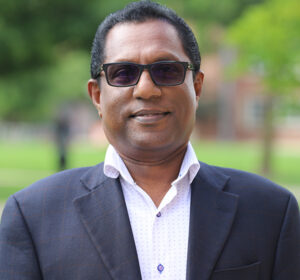
Dr. Priyantha Kumarawadu is an Associate Teaching Professor in the Electrical Engineering and Computer Science (EECS) department at Syracuse University. His research interests broadly lie in the areas of artificial intelligence, machine learning and Internet-of-Things (IoT), focusing on the application of deep learning and AI algorithms in developing new methodologies for real-time decision making to solve challenging real-world problems. Building deep learning-based software to make real world impact in the areas of health, agriculture, and education is one of the primary objectives of his research. He further extends his research to explore the impact of artificial intelligence in social, economic and cultural context, and the usage of machine learning to secure IoT infrastructures in various application domains such as smart homes, smart health, and smart wearables.