
Course Overview
Embark on a transformative one-week journey into the future of medicine powered by Artificial Intelligence (AI). In this immersive summer course, creativity, technology, and compassion come together to reimagine how healthcare is delivered. Designed specifically for motivated high school juniors and seniors passionate about technology, biology, and problem-solving, this course introduces students to the revolutionary role of AI in diagnosing diseases, analyzing medical images, predicting outbreaks, and personalizing treatment.
Over one engaging week, participants will gain foundational knowledge of AI, explore its real-world applications in healthcare, and work collaboratively on projects that simulate how data-driven intelligence can save lives. Students will engage in lectures, interactive workshops, and team-based projects under the guidance of expert instructors and mentors in the AI and health technology fields.
All students who successfully complete the course will receive a Certificate of Completion and have the opportunity to request a Syracuse University noncredit transcript.
Course Objectives
- Explain the core concepts of artificial intelligence, machine learning, and neural networks, and describe how these technologies are transforming modern medicine—from image analysis to drug discovery.
- Explore how AI algorithms process and interpret medical data from imaging, genetics, and wearable devices to support healthcare professionals in diagnosis and treatment.
- Examine the ethical, legal, and social challenges of using AI in healthcare, including issues of data privacy, bias, and fairness, and discuss strategies for responsible innovation.
- Apply AI tools and techniques to healthcare datasets by designing and testing models or applications that identify patterns, predict outcomes, or improve patient care.
- Work collaboratively in teams to communicate ideas, develop creative solutions, and present AI-driven projects that address real-world healthcare challenges.
- Engage with healthcare researchers, clinicians, and AI experts to gain insight into emerging fields and future career opportunities in medical technology and data science.
Course Information
Course Prefix and Number: TBD
Format: On Campus (at Syracuse University)
Eligibility: Students must be of rising junior or senior status – or a 2026 high school graduate whose reading comprehension is sufficient to read a textbook or articles used in colleges and high schools. No previous programming experience required.
Credit: Noncredit
Grading: Pass/Fail
Cost:
- Residential: $2,795
- Commuter: $2,309
Program rates are subject to change and will be approved by the board of trustees. Discounts and scholarships are also available.
Program Information
Summer College – On Campus:
Experience what college is really like: take a college-level course, live in a residence hall, have meals with friends in a dining hall, and participate in activities and events on campus.
Course Dates and Details
| Program | Course Dates | Synchronous Class Time (Eastern Time) | Credit/Noncredit |
|---|---|---|---|
| Summer College – On Campus | 1-Week Session II: Sunday, July 19 – Friday, July 24, 2026 | MTWThF; 10 a.m. – 4 p.m. | Noncredit |
To see if this course is ‘open,’ refer to the full course catalog.
Required Supplies
- Students are required to bring a laptop to class
- Open-source software: All the software that we will use are either open source (free) or free trials and we will install them in class so no need for students to have anything prepared ahead of time.
It would be helpful to have MS Office apps like Word, Excel, PowerPoint and Teams already on your computer.
Student Expectations
Students are expected to attend every class session and be engaged during all lectures, guest speakers and team activities. This course will offer the opportunity for academic and experiential learning, and the expectation is that all students come prepared to take full advantage of what is presented. Students are also expected to give each other feedback on in-class virtual presentation and participate in the final student presentation.
Good behavior in class (no disrespect, no disruptions, no distractions, no extra-curricular computer or cell phone usage, no side conversations, etc.) and adherence to all pertinent conduct standards are expected from all students. It is the student’s responsibility to inform the instructors if they must miss a synchronous class session due to health concerns, religious observances, or other obligations.
Typical Day
Tentative Schedule
Sample Daily Schedule (10:00 a.m. – 4:00 p.m.)
- Morning Session (10:00 a.m. – 12:00 p.m.)
- Topic Review & Discussion: Recap previous day’s material to reinforce understanding.
- Lecture / Interactive Lesson: Introduction of new topics related to AI in healthcare (e.g., medical imaging, diagnostics, bioinformatics).
- Mini Case Study: Analyze real-world examples of AI applications in hospitals, labs, or global health.
- Afternoon Session (12:30 p.m. – 4:00 p.m.)
- Hands-On Workshop: Students collaborate in small teams to use AI tools (e.g., image classifiers or data analysis platforms) on healthcare-related problems.
- Guest Speaker (Occasional): Hear from professionals working in AI research, biotechnology, or medical data science.
- Reflection & Preview: Teams share project updates, reflect on ethical or technical challenges, and prepare for the next day’s topic.
Note: While this structure serves as a general framework, activities and topics may vary daily to accommodate guest lectures, lab sessions, and project work.
Faculty Bio
Dr. Farzana Rahman
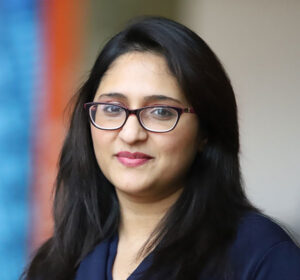
Dr. Farzana Rahman is an Associate Professor in the Department of Electrical Engineering and Computer Science (EECS) at Syracuse University. She teaches many exciting courses in computer science and engineering. Dr. Rahman works closely with local high schools to promote awareness and understanding of Artificial Intelligence (AI) and its real-world impact. She has led interactive outreach sessions for 9–12th grade students on topics such as how AI tools work, the importance of ethical AI use, and how to recognize and reduce AI bias. She also the directs NSF-funded project that is creating virtual labs for high school and undergraduate students. These labs introduce learners to cutting-edge areas of computer science, including artificial intelligence, machine learning, software engineering, quantum computing, ethics, and accessibility. Dr. Rahman’s broader research focuses on improving how computer science is taught and learned. She designs technology-enhanced learning environments and studies how to help students develop confidence, creativity, and curiosity in computing. Her work has been recognized with numerous awards, including the College Educator of the Year Award from the Technology Alliance of Central New York, SU Chancellor’s excellence in student experiences award, Meredith Teaching Recognition Award from Syracuse University, and national honors from Google, NCWIT, and the American Association of Colleges and Universities.