
Course Overview
This course invites premed-minded high school students to step into the world where medicine and engineering intersect. Through interactive case studies, real-world clinical scenarios, and guided design challenges, students will explore how biomedical engineers and physicians work together to solve medical problems. From analyzing vital signs and imaging data to simulating medical devices and physiological systems, students will experience firsthand how engineering principles underpin modern healthcare innovation.
Each week, students will take on the role of a “clinical problem solver,” investigating failures and innovations in medical technology, from prosthetics and pacemakers to diagnostic sensors and hospital systems. Through coding exercises, modeling activities, and ethical discussions, they will build both technical fluency and human-centered design thinking. By the end of the course, students will understand how to approach health challenges with both a clinician’s empathy and an engineer’s analytical mindset.
All students who successfully complete the course will receive a Certificate of Completion and have the opportunity to request a Syracuse University noncredit transcript.
Course Objectives
By the end of this class, students will be able to:
- Explain how biomedical engineers contribute to clinical diagnosis, treatment, and device design.
- Model and analyze basic physiological systems (e.g., heart, lungs) using computational or mathematical tools.
- Interpret and visualize biological or medical data to draw meaningful conclusions.
- Apply engineering design principles to propose creative solutions to clinical problems.
- Evaluate the ethical, human, and societal dimensions of medical technology.
- Communicate technical findings and design ideas clearly to both technical and non-technical audiences.
Course Information
Course Prefix and Number: TBD
Format: Online
Eligibility: Students must be of rising high school sophomore, junior, or senior status – or a 2026 high school graduate.
Applying students should have completed at least one year of high school biology or physical science.
Credit: Noncredit
Grading: Pass/Fail
Cost: $1,995
Program rates are subject to change and will be approved by the board of trustees. Discounts and scholarships are also available.
Program Information
Summer College – Online: Explore college life before stepping foot on campus! High school students can enroll in a college-level course, pursue their academic interests, and meet likeminded students in daily virtual events and activities.
Course Dates and Details
| Program | Course Dates | Synchronous Class Time (Eastern Time) | Credit/Noncredit |
|---|---|---|---|
| Summer College -Online | 6-Week Session: Monday, July 6 – Thursday, August 14, 2026 | MTWTh; 7 – 9 p.m. (EST) | Noncredit |
To see if this course is ‘open,’ refer to the full course catalog.
Required Supplies
Students will need access to a laptop or desktop computer capable of running web-based applications and connecting to Zoom for synchronous sessions. A stable internet connection, webcam, and microphone are required to support full participation in discussions and activities. Students should also have access to the Adafruit Circuit Playground Express (or equivalent microcontroller board) along with basic electronic components such as jumper wires, LEDs, resistors, and alligator clips. No special attire or additional equipment is required. All software tools used in this course will be free, open-source, and web-based, ensuring that students can easily complete all design and coding activities without purchasing additional software.
Typical Day
Tentative Schedule
Each class session blends interactive learning with hands-on exploration. During the synchronous Zoom meetings, students participate in guided discussions, clinical case simulations, and short team-based design challenges that connect real medical problems to engineering solutions. Sessions are dynamic, emphasizing collaboration, critical thinking, and application of concepts rather than passive lectures.
Outside of class, students will spend approximately 30 minutes per day completing short assignments such as coding exercises, data analyses, design sketches, or reflective journals. These activities reinforce the day’s lesson and help students apply clinical and engineering thinking independently, deepening their understanding of how doctors and engineers work together to innovate in healthcare.
When class is over, and on weekends, students can look forward to various Summer College virtual activities to meet and connect with other students across the world. Check out our Virtual Campus Experience page for more information!
Faculty Bio
Douglas Yung – Associate Teaching Professor, Bioengineering, College of Engineering & Computer Science
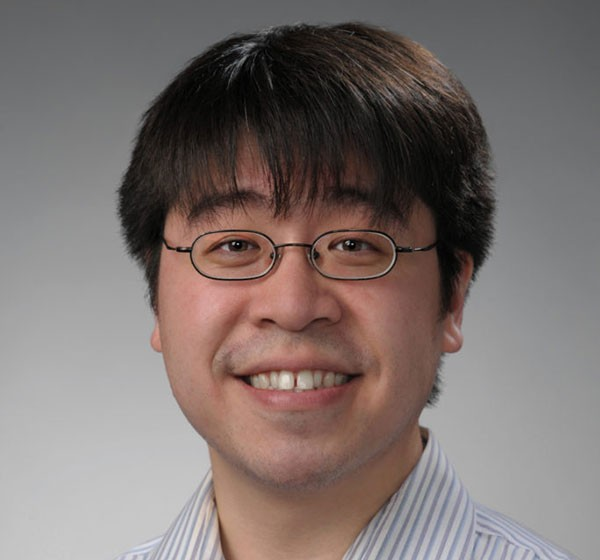
Douglas Yung is an Associate Teaching Professor in the Department of Biomedical and Chemical Engineering at Syracuse University and serves as the Director for the Bioengineering undergraduate program. He completed his B.S. in electrical engineering and mathematics at UCLA in 2003 and later pursued a Ph.D. in bioengineering from Caltech in 2008. Following this, he spent time at the Jet Propulsion Laboratory in California as a NASA Postdoctoral Fellow, working on sensor development, microfluidics, and bacterial spore viability. In 2009, he joined the Department of Electronic Engineering at the Chinese University of Hong Kong as an Assistant Professor.
Prof. Yung is not just a distinguished academic but a visionary biomedical engineer. He is known for fostering expansive collaborations that bridge the gaps between academia, industry, hospitals, and communities on a grand scale. His intrigue lies at the intersection of microbes and engineering tools, particularly on a micro- and nano-scale. He is actively pioneering techniques to evaluate the resilience of superbugs and derive energy from extremophiles, merging electrochemical and optical techniques with MEMS devices. Over the past 12 years, he has championed more than 20 STEM outreach programs, impacting over 500 K-12 students. His contributions to education have been lauded with awards, including the College Educator of the Year by the Technology Alliance of Central New York (TACNY). A staunch advocate for hybrid teaching, Prof. Yung promotes a holistic learning environment rich in hands-on projects, experiential activities, and peer collaboration, a marked shift from conventional pedagogies.